ABA International Criminal Law Committee Newsletter Issue 3 (1 April 2024) Now Available

Download the PDF here.

Dear Friends of the Committee,

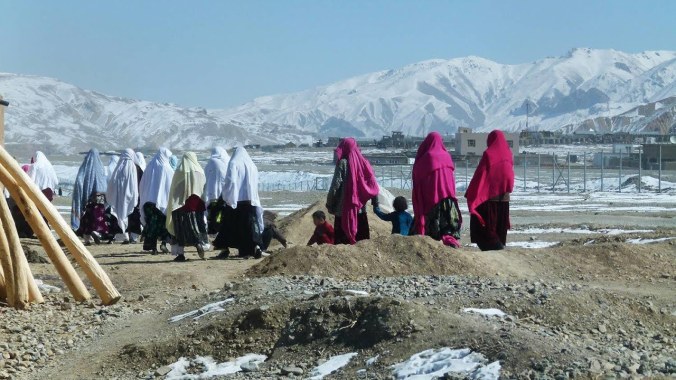
We have started 2024 off with a tremendous amount of energy and hope to keep it up! In January 2024, the ABA House of Delegates met and passed an updated resolution on the Rohingya genocide. The resolution was presented to the ILS Council by our committee. You can read more about Resolution 503, here. In February, your Co-Chairs completed a policy paper calling for ABA and international action on international crimes being perpetrated against the Hazara in Afghanistan. You can read the policy paper, here. Our hope is that our committee will continue to utilize this policy tool to raise awareness on significant issues and continue to educate members of the ABA about what types of issues international criminal law covers and its continued importance.


In April we will be presenting to the ILS Council two resolutions, one on Tibet and the other on the Hazara. Of course, we have continued our programming on a diverse range of topics! In April and May we have two dynamic programs, one focusing on transitional justice in Chile after Pinochet and in May, we will be partnering with the India/South Asia and Oceania committee to discuss international crimes in West Papua.


Thank you for taking the time to read our newsletter. I hope you will take time to share any recent publications or news with the committee in our next newsletter or in ABA communities.


Happy Spring!
Regina Paulose
Co-Chair, ICL Committee

Download the PDF here.


PREVIOUS ISSUES OF THE NEWSLETTER:

1 JANUARY 2024

8 APRIL 2023

8 JANUARY 2023

31 JULY 2022

30 APRIL 2022

31 JANUARY 2022

30 OCTOBER 2021

Justice and Accountability after Pinochet

Wednesday, April 17, 2024 at 12:00 p.m. EDT

Watch the recording here.

On September 11, 1973, General Augusto Pinochet launched a coup in Chile that lasted for 17 years. Current estimates indicate that during this time frame, 1,747 people were killed, 1,469 people were victims of forced disappearance, and more than 1,856 people were tortured. In 1979, the Pinochet regime implemented a self-amnesty provision, protecting almost all those involved from prosecution as a result of the coup and its aftermath. After the dictatorship ended, Chile began a series of justice and accountability efforts and, even today, continues prosecutions and conversations around the impact of the Pinochet regime.

This webinar will explore a brief background of what happened during the Pinochet regime, justice and accountability efforts after the regime, the role of third-party actors in these justice and accountability efforts, and what other pathways exist for victims and survivors of human rights violations under Pinochet.

Join the ILS International Criminal Law Committee as we hear from Javier Andres Contreras Olivares, Legal Advisor, Unit of Public Policies, Division of Promotion, Undersecretary of Human Rights, Ministry of Justice and Human Rights, Chile.

This webinar is free and open to all.

About the speaker

Javier Andrés Contreras Olivares is a Chilean lawyer with extensive professional experience in human rights, international law, criminal law and public policies.

For ten years, Javier disputed highly technical and complex accountability cases about gross violations of human rights perpetrated by the dictatorship of Augusto Pinochet (1973-1990), with a high rate of convictions.

Since April 2022, Javier has been the Legal Advisor of the Unit of Public Policies, Division of Promotion, Undersecretariat of Human Rights of Chile.

There will be an opportunity for attendees to ask questions at the webinar. However, you may also submit questions for Javier in advance through the online form below. Please understand that due to time restrainsts, we may not be able to get to every question during the program.

Go back

Your message has been sent

Warning
Warning
Warning
Warning

Warning.


A program by the International Criminal Law Committee of the American Bar Association International Law Section
Co-sponsored by the International Association of Genocide Scholars

ABA International Criminal Law Committee Newsletter Issue 2 (1 Jan. 2024) Now Available

Download the PDF here.

Dear Friends of the Committee,

Our news coverage in this edition reveals some emerging trends that are encouraging from a rule-of-law perspective. The involvement of non-injured parties at the ICJ reflects a more inclusive approach to international law, recognizing the interconnectedness of nations and the impact of rulings beyond immediate parties. The criminalization of ecocide marks a pivotal moment in environmental law, signaling a global acknowledgment of the urgent need to protect our planet with enforceable legal mechanisms. Meanwhile, the diminution of the head-of-state immunity signals a bold reaffirmation of the principle that no one is above the law, reinforcing accountability at the highest levels of governance.

As we step into the new year, we are thrilled to share that our Committee successfully presented a Resolution and Report (R&R) to the Section Council concerning the crime of genocide committed against the Rohingya of Myanmar. This R&R, which updates existing Association policy, is now poised to be presented at the ABA Midyear Meeting to the House of Delegates, marking a pivotal step in our ongoing advocacy efforts.

We would also like to emphasize the importance of self-nominations for both Membership and Steering Group members. Our Committee’s strength lies in its diverse and dynamic membership. Your participation is crucial in shaping the future of the ICLC and ensuring that we continue to lead with excellence and innovation. Together, we can continue to make significant strides in the field of international criminal law.

Warm regards,
Tim Franklin
Co-Chair, International Criminal Law Committee

Download the PDF here.


PREVIOUS ISSUES OF THE NEWSLETTER:

1 OCTOBER 2023

8 APRIL 2023

8 JANUARY 2023

31 JULY 2022

30 APRIL 2022

31 JANUARY 2022

30 OCTOBER 2021

Examining the Kurdish Genocides

An ICLC webinar on January 10, 2024 at 12 pm (noon) ET

In 2023, the International Association of Genocide Scholars (IAGS) passed a Resolution recognizing the genocides which have been perpetrated against the Kurdish communities in Iraq. The Resolution specifically declared the “atrocities perpetrated by the Iraq government of Saddam Hussein and by ISIS (Da’esh) against the Kurds constituted genocide and crimes against humanity.” The Resolution further calls upon the international community to create pathways for accountability and justice to stop further impunity for the crimes which have been committed.  This webinar will introduce audience members to the events which took place in Iraq and will focus on two specific genocides, Anfal and Halabja. The speakers will also discuss the impact the crimes of genocide and crimes against humanity have today on Kurdish people in Iraq. 


Register to attend this webinar here:

https://us02web.zoom.us/meeting/register/tZMkduCoqzIoGdEqvMisktMCDShHXMSFoITn


Moderator:

Jody Prestia, ICLC Steering Group Advisor 

Speakers:

Awring Shaways is the founder of KG Lobby Center, Shaways has been instrumental in raising awareness about the plight of the Kurdish people and advocating for their rights. As KG Lobby Center they have tirelessly fought for the acknowledgment of the atrocities committed against the Kurdish people and have worked to ensure that their history and suffering are not forgotten. She is submitted a resolution for recognition of Kurdish Genocide which was accepted by 97.5% of the votes by the International Association of Genocide Scholars.  Throughout her career, she has worked extensively with women organizations, specifically Kurdish women and refugees, showcasing her commitment to promoting gender equality and empowering women. Through her efforts, she helped amplify the voices of marginalized women and worked towards creating a more inclusive society. With an unwavering belief in the power of advocacy and activism, and lobbying, Shaways remains a driving force in the quest for justice and equality. Their work serves as a beacon of hope and reminds us of the importance of standing up for the rights of marginalized communities.

Michael A. Newton is an expert on terrorism, accountability, transnational justice and conduct of hostilities issues. Over the course of his career, he has published more than 90 books, articles, op-eds and book chapters. He has been an expert witness in terrorism related trials both in domestic courts and at the International Court of Justice. Professor Newton is admitted to the Counsel List of the International Criminal Court, where he helped prepare the appeal of Jean-Pierre Bemba and has participated in oral arguments at the Appeals Chamber in other cases. At Vanderbilt, he developed and teaches the innovative International Law Practice Lab, which provides expert assistance to judges, lawyers, legislatures, governments and policy makers around the world, and directs the International Legal Studies Program. Newton is the editor of The United States Department of Defense Law of War Manual: Commentary and Critique (Cambridge University Press). He led the team-teaching international law to the first group of Iraqis who began to think about accountability mechanisms and a constitutional structure. He later shuttled back and forth to Baghdad assisting international and Iraqi lawyers prosecuting cases before the Iraqi High Tribunal while serving as the International Law Adviser to the Judicial Chambers from 2006 to 2008. He began assisting Iraqi officials, victims and civil society groups on legal issues associated with documentation and investigation of crimes committed by Da’esh on Iraqi soil days after Yazidi victims fled towards Mount Sinjar. Newton remains active in providing assistance to the Iraqi judiciary in Da’esh related prosecutions.

Sylvia Ronnau is currently the Legal Director at KG Lobby Center where she helped obtain recognition of the Kurdish genocides at the International Association of Genocide Scholars. Before that, she was the Legal Director at Genocide Watch where she managed myriad legal associates and managed various projects, including a project to sue Facebook in various jurisdictions for promoting hate speech against the Rohingya. For 16 years, she worked as an attorney at myriad law firms in various areas of the law, including criminal, immigration, civil rights, among others.  With her legal training, she has helped numerous individuals obtain asylum in the United States and aided women subject to sex trafficking, domestic violence, and gender discrimination. She graduated cum laude with her B.A. in International Relations at Stanford University where she also obtained an M.A. in Sociology. She received her law degree from the Santa Clara University School of Law. During law school, she acted as the Managing Editor of the Santa Clara Journal of International Law where she published her law review article, “The International Criminal Court’s Quest to Protect Rape Victims of Armed Conflict: Anonymity as the Solution” 2 Santa Clara J. Int’l L. 138 (2004).


This webinar is free and open to all. Register here:

https://us02web.zoom.us/meeting/register/tZMkduCoqzIoGdEqvMisktMCDShHXMSFoITn


Photo Credit: Rudaw: https://www.rudaw.net/english/kurdistan/14042023
Drafting the Crime of Ecocide: Contours, Challenges, and Context

Wednesday, December 6, 2023 at 9 AM ET

Register here: https://us06web.zoom.us/webinar/register/WN_5nNSCLgxTOGFreZ2oAxWkQ

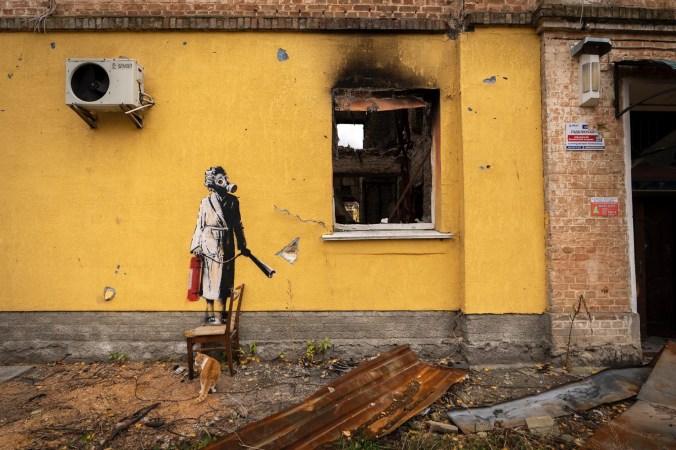
The ABA International Criminal Law Committee is excited to host our last webinar of 2023 focusing on the crime of ecocide, still in its creation/drafting stages at the international level. Many governments around the world have introduced legislation to codify the crime of “ecocide” int their national jurisdictions. These steps are contributing to a growing chorus of voices who seek to codify the “fifth” international crime of ecocide. 

In 2021, a group of experts were commissioned by Stop Ecocide Foundation to draft a definition of the international crime of ecocide. The core text and commentary produced by the independent expert panel can be found here.

Two years later, our committee has convened a panel of diverse experts to answer questions about the ever-evolving subjects of ecocide and climate justice, the draft international crime of ecocide, case studies involving ecocide, and the challenges that lay ahead in moving the international community to adopt this next crime under the Rome Statute.

Moderator: Deniz Tamer

Expert Panelists

MrsFadjar Schouten-Korwa, Human Rights Lawyer


Lucas Yamat, Climate Change and Pastoralism Economist and Sustainability Researcher Fellow with the Basque Centre for Climate Change (BC3), Spain


Dr. Zoi Aliozi, Climate Justice expert and human rights consultant


Nelson Ologhadien, Lawyer and PHd at Energy, Environmental, Sustainability Law, and Policy at the University of Dundee, UK


Dr. Rachel Killean, Senior Lecturer, University of Sydney Law School


This webinar is free and open to all. Please register in advance here.

Protection or Peril?

The Rule of Law and Gender Based Violence

Wednesday, November 8, 2023 | 12:00 – 1:00 p.m. ET

Presented by the International Criminal Law Committee. Free and open to all.

Click Here to Register

In July 2023, the World Health Organization alongside other partners at the United Nations, launched the RESPECT platform, an online resource to help prevent violence against women. The World Health Organization noted “preventing and responding to violence against women and girls continues to be a worldwide public health, gender equality and human rights priority.” Other organizations such as the World Bank, have adopted WBG Gender Strategy 2024-2030 in order to “propose innovations, financing, and collective action” to end gender-based violence. While different sectors continue to find ways to increase prevention measures to stop this type of violence, the effectiveness of the rule of law in this context remains an important question. This panel session will focus on different situations where the law has been effectively (or ineffectively) utilized to address gender-based violence and identify other pathways to consider when responding to gender-based violence.

Susan Schwartz, Division Chair, International Law Section

Reem Alsalem, UN Special Rapporteur on violence against Women and Girls, its causes and consequences

Nema Milaninia, Special Advisor to the U.S. Ambassador-at-Large for Global Criminal Justice

Patricia Elias, Chief of Global Diplomatic Campaign, Every Woman Treaty

Dr. Gema Kloppe-Santamaría, Assistant Professor of History and International Affairs at the George Washington University and Wilson Center Global Fellow

Beth Lilach, Director Konar Center for Tolerance and Jewish Studies, Nazareth University


This webinar is free and open to all. Click Here to Register.

ABA International Criminal Law Committee Quarterly Newsletter Issue 1 (1 Oct. 2023) Now Available

Dear Friends of the Committee,

International criminal law continues to evolve, often in rapid and transformative bursts. Just recently, Karim Khan, the International Criminal Court Prosecutor, announced the potential for prosecuting acts of cyber warfare as crimes under the Rome Statute. Meanwhile, the civil justice system in the Democratic Republic of Congo held one of its first trials for serious crimes, resulting in the conviction of a militiaman for crimes against humanity committed during the 2017 Kamuina Nsapu armed insurrection. Additionally, Swiss legal authorities have indicted Algeria’s former military chief for suspected crimes against humanity related to the country’s 1990s civil war – the highest-level military official ever set to be tried under universal jurisdiction laws.

We have a robust year of programming planned. We are excited to announce our submission to the 2023 Year in Review will focus on Tigray, Iran, and Myanmar. Our Committee continues to keep you informed through our webinars. We welcome your participation.

Best regards,

Co-Chairs, International Criminal Law Committee

Regina Paulose and Tim Franklin


Download the PDF here.


PREVIOUS ISSUES OF THE NEWSLETTER:

8 APRIL 2023

8 JANUARY 2023

31 JULY 2022

30 APRIL 2022

31 JANUARY 2022

30 OCTOBER 2021

Justice Delayed or Justice Denied? Genocide and the Hazaras of Afghanistan

a webinar presented by the International Criminal Law Committee

co-sponsored by the Middle East Committee

International Law Section of the American Bar Association

Thursday, October 12, 2023, at  11:00 am EDT (NY Time zone)

Advance Zoom registration required.


The Hazara People of Afghanistan are among the largest ethnic minority groups in Afghanistan that have continued to face discrimination and persecution in the country for decades. It is reported that in the 1890s, the Hazara faced brutal genocidal campaigns, with survivors sold off as slaves and dispossessed of their homes and lands. The Hazaras have faced significant human rights violations, including discrimination in education, curtailment of political rights, and inability to freely practice their religious beliefs. In his February 2023 report to the Human Rights Council, United Nations Special Rapporteur for Afghanistan Richard Bennett stated that the Hazara “have endured the most violence and prejudice of any ethnic group in Afghanistan.”

This webinar will introduce the Hazara People, the situation in Afghanistan involving their human rights violations, and examine international crimes in this context. 


Moderator: Tim Franklin, ICLC Co-Chair

Speakers:

James Joseph, Director, The Duty Legacy

Dr. Homira Rezai, Chair, Hazara Committee UK 

Mehdi J. Hakimi, Lawyer and Scholar, University of Oxford


Webinar is open for all to attend, but advance registration is required.

ZOOM REGISTRATION LINK

Zan. Zendegi. Azadi. — Women. Life. Freedom.: The One-Year Anniversary of the Death of Mahsa (‘Jina’) Amin

Friday, September 22, 2023 | 12:00 p.m. – 1:45 p.m. ET

A free webinar and open to all.

REGISTER HERE

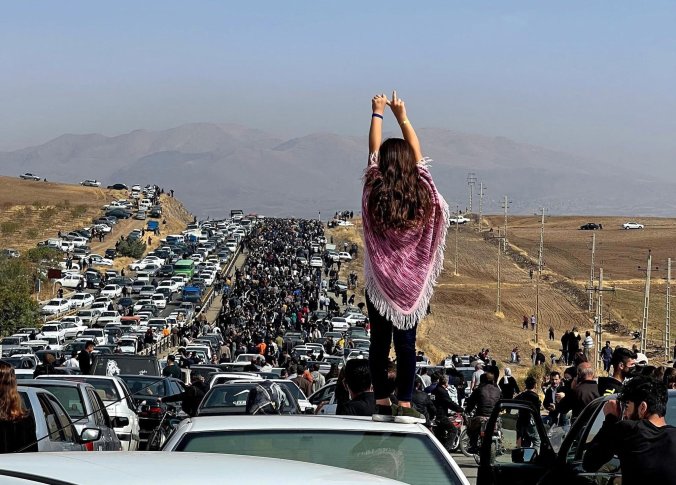
Saturday, September 16 — marked the one-year anniversary of the death of Mahsa (“Jina”) Amini, the Kurdish-Iranian woman who died in the custody of the Iranian “morality police,” who had charged her with improperly wearing her hijab. 

Amini’s death sparked a massive women- and youth-led uprising which continues to this day and which threatens the very foundation of Iran’s brutal theocracy.

This Friday, September 22, from Noon-1:45 p.m. Eastern Time, the Middle East  Committee will be sponsoring “Zan. Zendegi. Azadi. — Women. Life. Freedom.: The One-Year Anniversary of the Death of Mahsa (‘Jina’) Amini.”

Please join us to honor the memory of Jina Amini, to take stock of the protests at the one-year mark, to demonstrate solidarity with our Iranian lawyer colleagues, and to pay tribute to the legions of protesters who are risking their very lives and their liberty in their quest for democracy, freedom, justice, and the rule of law.

You can register here

In the words of the valiant protesters’ rallying cry:  Zan. Zendegi. Azadi. — Women, Life. Freedom.

Featuring:
Mary L. Smith, 
President, American Bar Association (“ABA”)Chicago, IL
Javaid Rehman, U.N. Special Rapporteur on the Situation of Human Rights in the Islamic Republic of IranLondon, UK
Gissou Nia, Board Chair, Iran Human Rights Documentation CenterDirector, Strategic Litigation Project, The Atlantic Council Washington, DC
Omid Shams, Operations Director, Justice for IranIranian Writer & Lawyer/Activist in ExileLondon, UK

Program Co-Chairs:
Regina Paulose, 
International Criminal Law AttorneyMiami, FL
Hon. Delissa A. Ridgway, U.S. Court of International TradeNew York, NY