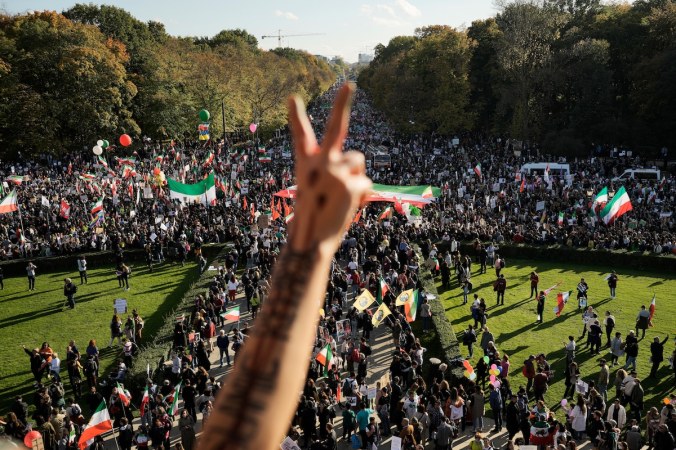
The International Criminal Law Committee invites interested members within the American Bar Association to join our meeting on January 27, 2023 at 12 noon (EDT) with Shadi Sadr, Iranian Lawyer and Co-Founder and Executive Director of Justice For Iran. This meeting will focus on the recent wave of considerations being made by the UK and EU to designate the IRGC a terrorist organization. While the US has already made this particular designation, the speaker will bring the participants up to date on why this conversation is taking place now, the importance of such a designation by the UK and EU, and the impact such a designation will have on the people of Iran and beyond.
Author: abaiclc
ABA International Criminal Law Committee Quarterly Newsletter Issue 1 Now Available
Welcome to the 2022-2023 ABA Year
Dear Friends of the Committee,
Welcome to the first issue of this year’s International Criminal Law Committee newsletter. It has been a busy quarter for us as well as the development of ICL. In this issue, you will see the desire to act in response to global events manifested from expanded application of universal jurisdiction, to collective interventions, and even to a debate between empowerment of existing institutions and creation of new mechanisms.
This platform is intended to support your and our collective work towards accountability for international crimes. In an effort to diversify and incorporate all perspectives, we invite your input and collaboration. And as always, we hope you find this newsletter informative as we go forward together in this new year.
Vy T. Nguyen
Co-Chair, ICL Committee
IN THIS ISSUE:
- Section and Committee News
- International and Hybrid Criminal Prosecutions
- National Decisions
- Policies and Initiatives
- Fact Finding Missions
- Enforcement
- Enhanced Cooperation
- Restoration and Restitution
- Calls for Public Consultation
Challenges and Pathways for Accountability and Justice in Tigray
December 7, 2022 at 11 am EDT
Now available online: https://bit.ly/3VFTorn
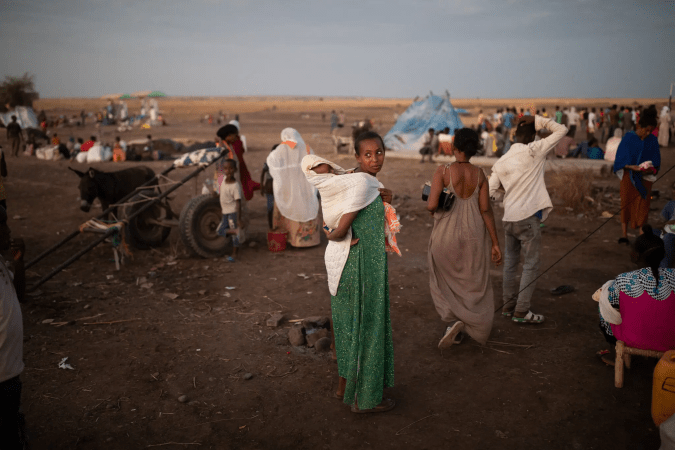
A little over two years ago, Prime Minister Abiy Ahmed of Ethiopia launched a military offensive into the Tigray region. As a result, the situation has spiraled out of control, leading to a humanitarian catastrophe. Reports indicate that millions are facing starvation; access to medical assistance is severely hampered and not reaching civilians as outbreaks of infectious diseases tear through communities. Hundreds of thousands of people are internally displaced, and thousands of people have fled due to the conflict.
Many are calling for a robust solution to this humanitarian nightmare, particularly as allegations of genocide, crimes against humanity, and war crimes are directed against various actors. It is questionable whether a recent peace agreement can stop the violence or if such an agreement is sustainable.
Please join the ABA ICLC in their end-of-year program focusing on one of the most overlooked humanitarian situations in the world with our panel of experts. This event is open to all, but registration is required (at no cost).
Speakers:
Temesgen Kahsay, Assistant Professor at the Norwegian School of Leadership and Theology
Alex DeWaal, Executive director of the World Peace Foundation and Research Professor at the Fletcher School, Tufts University
Floriane Lavaud, Counsel at Debevoise & Plimpton LLP
FEET TO THE FIRE: Holding Iran Accountable for Its Egregious Human Rights Violations
A NEW WEBINAR PRESENTED BY THE ABA INTERNATIONAL LAW SECTION
Friday, November 4, 2022, 1:00 PM-2:30 PM EDT
Now available online on the ICLC YouTube channel:
Sponsored by
the International Criminal Law Committee
Co-Sponsors:
ABA Center for Human Rights (CHR), ABA U.N. Representatives & Observers, ABA Criminal Justice Section, ABA Judicial Division, ABA Section of Civil Rights & Social Justice, International Human Rights Committee, International Courts & Judicial Affairs Committee, National Security Committee, U.N. & International Organizations Committee, Women’s Interest Network, and National Association of Women Judges (NAWJ)
Welcome/Introductory Remarks
ABA President Deborah Enix-Ross
The distinguished panel includes:
- Colleen Rohan, Panel member of the the Aban Tribunal, International Criminal Defense Attorney
- Javaid Rehman, United Nations Special Rapporteur of Human Rights in Iran
- Reem Alsalem, United Nations Special Rapporteur on Violence against Women and Girls
- Gissou Nia, Director of the Strategic Litigation Project, Atlantic Council; Author, “Closing the Accountability Gap on Human Rights Violators in the Islamic Republic of Iran Through Global Civil Litigation Strategies”
- Judge Delissa Ridgway, Human Rights Advocate (Moderator)
In November 2019, hundreds of thousands of Iranians throughout the country took to the streets to protest skyrocketing fuel prices and the inadequate government response. Despite the protesters’ peaceful methods, hundreds were murdered by Iranian forces. While the international community was largely silent in response to the barbarity, three NGOs established the Iran Atrocities (Aban) Tribunal to hold the Iranian regime accountable for its violence. This civil society-led effort was prescient, as the same regime is now in the midst of another bloody crackdown against the Iranian people and the ongoing women-led uprising in the wake of the beating death of 22-year old Mahsa Amini following her arrest by the Morality Police for violating Iran’s compulsory hijab rules. For the Iranian people, the authorities’ savage efforts to put down the current protests are a case of “déjà vu all over again” – history repeating itself.
Join us for a highly timely and topical briefing exploring these brutal dynamics, bringing together experts on Iranian human rights to discuss the Aban Tribunal’s September 30 judgment, the ongoing nationwide rebellion, and what lies ahead for Iranian human rights. Could this be the beginning of the end for the Iranian regime?
Attention Fellow ABA Int’l Law Section (ILS) Members: ABA ILS Afghan Professionals Pilot Program needs YOUR ASSISTANCE!
The text below is excerpted from a letter from Michael H. Byowitz which you can download in full here.
The ABA ILS Afghan Legal Professionals Scholarship and Mentoring Pilot Program (Pilot Program), with BOG approval, is working to aid Afghan judges, prosecutors, and lawyers to qualify as lawyers or gain law-related employment within the U.S. legal system.
The Pilot Program is seeking online donations from ABA leaders and active members. We also have begun reaching out to law firms, foundations, and others. Suggestions for outreach and introductions to perspective donors would be appreciated.
The Pilot Program needs volunteers from across all areas of practice to join with the Afghan Professionals Resettlement Task Force (Task Force) to help with our work as well. In addition, volunteers may apply to serve as Mentors in the Pilot Program. In these capacities, volunteers may, for example, mentor Afghan legal professionals applying to LLM programs, studying for the bar exam, and seeking employment in the U.S. legal system; help the Task Force with drafting documents needed for agreements with law schools and other co-sponsoring organizations; reach out to state and local bars and law schools for potential partnering with the Task Force; and mentor Afghan legal professionals who seek to qualify for law-related professions—e.g., paralegals, immigration advocates.
With your support, the Pilot Program will provide resettled Afghan judges, prosecutors, and lawyers—especially women—access to legal education through LLM programs, which will allow them to sit for a bar exam and pursue career opportunities in the U.S. legal system. The Pilot Program is designed to serve our Afghan colleagues who hope to rebuild their legal careers in the U.S. after being driven from Afghanistan with no options to return.
The Rohingya Genocide
Examining Pathways to Peace and the Return Home
a half-day virtual program hosted by the American Bar Association International Criminal Law Committee
September 23, 2022
8:00 am EDT, 10:00 am EDT, 12:00 pm EDT
Program Supporters


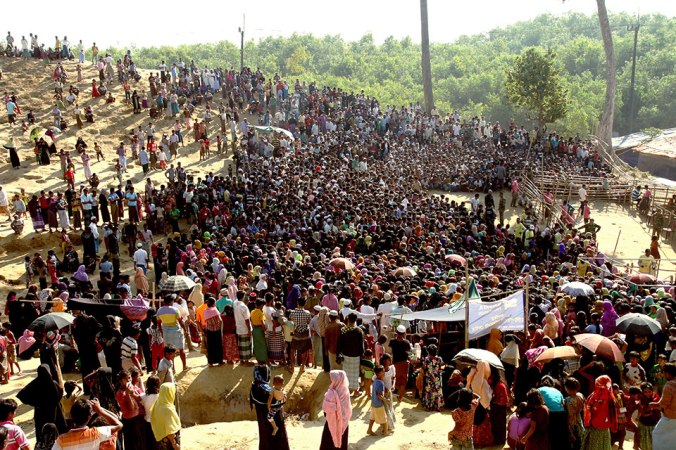
Since August 2017, the international community has continued to watch the Rohingya suffer degradation of their human rights. Rohingya refugees in Bangladesh are now facing calls for repatriation even though there are no conditions on the ground for a safe, durable, and dignified return to the Arakan (Rakhine) state in Burma (Myanmar). The conditions throughout Burma have worsened due to the February 2021 coup, where the Myanmar military took control of the country. This half-day program, hosted by the American Bar Association’s International Criminal Law Committee, will examine the past and present conditions the Rohingya have faced and continue to face as a result of genocidal policies and what, if any, factors are helping to address the genocide and related challenges. In addition, the program will look to what kinds of solutions and conditions must exist for the genocide to end and for the Rohingya to return safely home to the Arakan.
This is a virtual program and is free to attend. You must register for each session you are interested in; a separate link will be sent directly to a valid email address. Speakers to be announced in due course.
8:00 AM EDT SESSION 1: CURRENT CHALLENGES FACING THE ROHINGYA PEOPLE THROUGHOUT ASIA
Moderator: Alex Vesselinovitch, Co-Chair ABA International Criminal Law Committee
Panelists: Tapan Bose, Razia Sultana, Azril Mohd Amin, Sara Hossain
This session will focus on the current conditions the Rohingya are facing throughout Asia and examine the impacts of the continued commission of genocide and crimes against humanity within Burma. The panel will discuss how countries in Asia are handling the challenges brought on by the Rohingya genocide while the Rohingya people continue to seek safety from persecution.
REGISTER HERE: https://us06web.zoom.us/webinar/register/WN_PImoWYD_SB-QpiN6r_tp9w
10:00 AM EDT SESSION 2: GENOCIDE AND THE POLITICS OF RETURN: LESSONS FROM HISTORY
Moderator: Deniz Tamer, Attorney
Panelists: Corinne Lewis, Nurul Islam, Simon Billeness
This session will explore the history of the Rohingya people and the genocide and crimes against humanity they have faced for many decades. It will focus on the role of different actors which have caused the situation to deteriorate over time. This panel will also explore the impact of the perpetration of crimes against the Rohingya, focusing on movements into Bangladesh and previous efforts at return.
REGISTER HERE: https://us06web.zoom.us/webinar/register/WN_HgyRjO9hSGalwQt3u_iF_w
12:00 PM EDT SESSION 3: THE ROHINGYA PEOPLE AND THE LONG ROAD HOME
Moderator: Susan Schwartz, Co-Chair, ABA International Criminal Law Committee
Panelists: Arsalan Suleman, Habib Ullah, Nicholas Koumjian, Dr. Natalie Brinham
This session will build upon the other two sessions and focus on the future of the Rohingya people, specifically focusing on the importance of the rule of law, changes in policy, and key solutions to stopping the genocide and allowing a safe, voluntary, and dignified return home. Panelists will examine questions on how does a genocide “end”? What kinds of legal avenues exist that could help the genocide to end? What do conditions need to look like for a safe environment to be created for the Rohingya to return home in a dignified and voluntary manner?
REGISTER HERE: https://us06web.zoom.us/webinar/register/WN__oOt3Ic9RYOxrInHR84eXQ
ABA International Criminal Law Committee Quarterly Newsletter Issue 4 Now Available
- Committee News and Programs
- International and Hybrid Criminal Proceedings
- Policies and Initiatives
- Enforcement
- Enhanced Cooperation
- Restoration and Restitution
ABA International Criminal Law Committee Quarterly Newsletter Issue 3 Now Available
- ICYMI: Recent Committee Programs
- International and Hybrid Criminal Proceedings
- National Decisions
- Enforcement
- Enhanced Cooperation
- Policies and Initiatives
- Restoration and Restitution
- Other Developments
Sri Lanka’s Current Crisis: Opportunities for Constitutional Reform and Transitional Justice
A webinar sponsored by the ABA International Criminal Law Committee
Tuesday, May 31, 2022, 12:00pm ET – 1:00pm ET
CLICK HERE to register in advance for this meeting. After registering, you will receive a confirmation email containing information about joining the meeting.
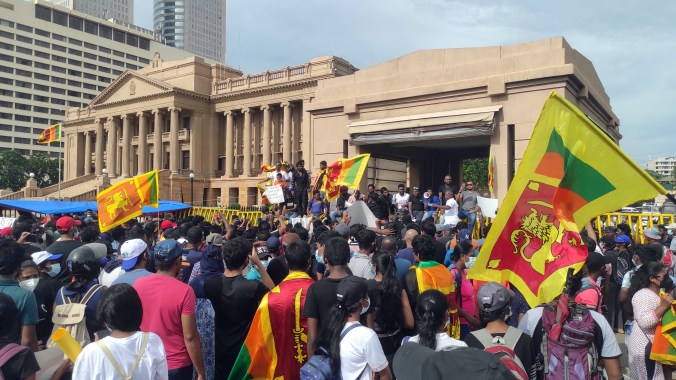
Respect for fundamental human rights in Sri Lanka is in serious jeopardy. In 2021, the UN Human Rights Council mandated that the UN Collect and analyze evidence of international crimes for future prosecutions. In February 2022, The United Nations High Commissioner for Human Rights on Sri Lanka reported the rights situation in alarming decline, contradicting government claims of improvement. The February 2022 report documents discrimination against religious and ethnic minorities and security forces’ targeting of civil society groups, while accountability for past abuses has been blocked. This program will shine a light on Sri Lanka’s current crisis and will highlight opportunities for constitutional reform and transitional justice.
Speakers:
Gehan Gunatilleke is a Sri Lankan human rights lawyer and academic focusing on media freedom and ethno-religious violence. He is currently a visiting fellow at Harvard Law School. His latest publication is ‘The Chronic and the Entrenched: Ethno-religious Violence in Sri Lanka‘. Gehan is a former Research Director at Verité Research, and a former advisor to the Ministry of Foreign Affairs (Sri Lanka). He has taught post-graduate courses on human rights, democratization and development offered by the University of Colombo, University of Sydney and Open University of Sri Lanka. He was also a human rights tutor at the University of Oxford. Gehan holds a D.Phil in Law from the University of Oxford, and an LL.M from Harvard Law School.
Frances Harrison is the Director of The International Truth and Justice Project. For two decades she was the BBC Foreign Correspondent for Pakistan, Bangladesh, Malaysia, Sri Lanka and Iran, reporting for TV, radio and online, delivering live broadcasts, documentaries and newspaper articles. Through this, Frances gained an in-depth insight and expertise in the region and spent four years living in Sri Lanka while at the BBC. Frances has also briefly worked at Amnesty International, OHCHR and multiple UN commissions. Her book, Still Counting the Dead: Survivors of Sri Lanka’s Hidden War, published in 2012, documents personal stories from the final phase of the war in Sri Lanka.
Vasuki Nesiah teaches human rights, legal and social theory at NYU Gallatin School where she is also faculty director of the Gallatin Global Fellowship in Human Rights. She has published on the history and politics of human rights, humanitarianism, international criminal law, reparations, global feminisms and decolonization. Vesuki was awarded the Gallatin Distinguished Teacher Award in 2021 and the NYU Dr. Martin Luther King Jr. Faculty Award in 2020. Her current book projects include International Conflict Feminism (forthcoming from University of Pennsylvania Press) and Reading the Ruins: Colonialism, Slavery and International Law.
USING OPEN-SOURCE INFORMATION TO DOCUMENT WAR CRIMES AND ATROCITIES IN UKRAINE AND BEYOND
An online seminar sponsored by the ABA International Criminal Law Committee
Tuesday, April 12, 2022 at 12:00 PM ET – 1:00 PM ET
UPDATE: Thanks to everyone who attended the program. Here is the video and the accompanying PowerPoint presentations.
The future of criminal investigations and prosecutions will be shaped by open-source information. This program explores the use of open-source information in criminal prosecutions; how this information can be verified; how this evidence can be used in documenting war crimes and atrocities, and the use of this evidence in international prosecutions.
Speakers:
Alexa Koenig, JD, PhD, is faculty director of UC Berkeley’s Human Rights Center (winner of the 2015 MacArthur Award for Creative and Effective Institutions) and a lecturer at UC Berkeley’s School of Law and School of Journalism. She is also co-founder of the Investigations Lab, which uses social media and other online information to strengthen human rights-related legal investigations and investigative reporting. Alexa has been honored with the United Nations Association-SF’s Global Human Rights Award, UC Berkeley’s Mark Bingham Award for Excellence, and as a 2020 Woman Inspiring Change by Harvard Law School. Her recent co-authored and co-edited books include Hiding in Plain Sight (UC Press 2016), Digital Witness (Oxford University Press 2020), and Graphic (forthcoming 2022).
Hannah Bagdasar is the lead investigator for Bellingcat’s Global Authentication Project as well as an investigator in its Justice & Accountability Unit. Before she was working at Bellingcat, Hannah was an analyst at the United Nations Independent Investigative Mechanism for Myanmar. Hannah has also served as an open-source investigations and legal consultant, working with NGOs combating disinformation and misinformation, as well researching the use of open source information as evidence at the international criminal and domestic levels. In addition, Hannah has interned at the International Criminal Court, in the Office of the Prosecutor’s Preliminary Examination Section, and was part of the first cohort of UC Berkeley’s Human Rights Investigations Lab. Hannah holds an LL.M in International and Comparative Law from the University of Helsinki, and a B.A in Legal Studies from UC Berkeley
Nathaniel A. Raymond is a lecturer at Yale’s Jackson Institute of Global Affairs and the Yale School of Public Health, where he is co-lead of the Humanitarian Research Lab. Raymond was the founding director of the Signal Program on Human Security and Technology at the Harvard Humanitarian Initiative. He was also director of operations for George Clooney’s Satellite Sentinel Project. Raymond has investigated mass atrocities and served as an aid work in multiple conflict zones, including Afghanistan, South Sudan, Ethiopia, the Middle East, Sri Lanka and elsewhere.
Arthur Traldi is a Senior Fellow at American University’s Program on Technology, Security, and the Law and a Senior Consultant with Lexpat Global Services. Arthur previously served as a prosecutor at the International Criminal Tribunal for the former Yugoslavia, litigating cases involving charges of genocide, crimes against humanity, and violations of the laws of armed conflict, and in Chambers at the International Criminal Tribunal for Rwanda. He is a co-chair of the ABA’s International Criminal Law Committee. Arthur is a graduate of Georgetown University Law Center and the College of William and Mary. Before working at ICTY and ICTR, he clerked for Justice Debra Todd on the Pennsylvania Supreme Court and Judge Arthur L. Zulick on the Monroe County Court of Common Pleas.